Projects
Brand Management
Empowering Enterprise Teams with Multi-Brand Customization
Executive Summary
To better support Drift’s expansion into the enterprise market, I led the design for Brand Management, a feature allowing large organizations to manage multiple brand identities from a single account. Previously, customers with multiple business units struggled with "brand collision," where bot styling and assets could not be segmented.
I partnered with cross-functional teams to map out a complex multi-tenant architecture, ensuring that assets like logos and colors remained consistent across different digital touchpoints. The design process involved balancing the need for global administrative control with the flexibility required by regional marketing teams.
The launch of Brand Management was a key driver in securing several high-value enterprise contracts. By providing a structured way to manage visual identities, we reduced brand setup time for new business units and significantly improved the "Professionalism" score in our annual customer satisfaction survey.
"If you just look at the websites that we have, they're almost very much identical...but it's the color that helps the customer distinguish. So if...you have a bot that pops up, it's the color, that's going to matter the most to match it.”
Drift is a revenue acceleration platform that facilitates communication with website visitors in real-time to help generate leads and improve sales opportunities. The AI-enabled solution comes with a chatbot to automate marketing pipelines and increase customer engagement.
Drift customers can only provide a singular chat experience to their prospects, hindering customers (with various sub-brands or products) from surfacing their brand identity. Customers are forced to either maintain multiple instances of Drift and place brands/experiences within each one or compromise to a singular experience and not surface the various brand differentiators. While the former solution is an upsell for Drift, it makes it difficult for customers to cross-evaluate the performances of their brands on Drift and forces a user to maintain multiple log-in credentials for their different Drift instances.
Our high level goals were to:
Visually differentiate between all underlying brands within a company
Allow a prospect to be moved from one brand experience to another in Chat
I conducted initial discovery into the problem, led the team through concept designs and iterated on final designs before officially kicking off the project. I also led communication with the Drift executive team on our progress and approach for company-wide communication.
Discovery: Early Insights
Based on Pendo feedback and customer conversations, my PM and I had a good initial understanding of why the incorporation of brands could help customers expand their Drift instance. Our business goal for the fiscal year was to integrate seamlessly into the business structures of our enterprise-level customers. While we understood the ‘what’, there was the question of ‘how’. Thus, before moving forward with a solution, I conducted a series of interviews to dig into this question. Put simply, I wanted us to understand where and how brands could exist in Drift based on customers’ business structures?
After 8 hr-long interviews with customers, I discovered the following:
Branding is the main distinguisher for customers with various solutions/products
Communication across industries between prospects is difficult
Customers are interested in cross-evaluating brand performance
Customers commonly referred to a brand existing hierarchically above a regional workspace
"One of the main challenges of the disparate system is being able to be able to see the different traction that we're getting from the different industries and...what we would need in terms of just optimizing those experiences."
Initial Iteration
Based on results of the generative research, I collaborated with my PM to map out where brands could exist hierarchically within Drift. We included engineering in this discussion to help us identify potential risks and limitations with our approach.
I positioned branding as a bridge between the global experience and a workspace, which is a way for existing customers to segment their Drift instance into different regions (i.e., APAC, LATAM, etc.). Essentially workspaces existed within a designated brand, with brands being defined as the look and feel of your Drift chatbot. Based on user feedback, I also incorporated the idea of a workspace admin in order to reflect the organizational breakdown of customers that exist across different regions or brands.
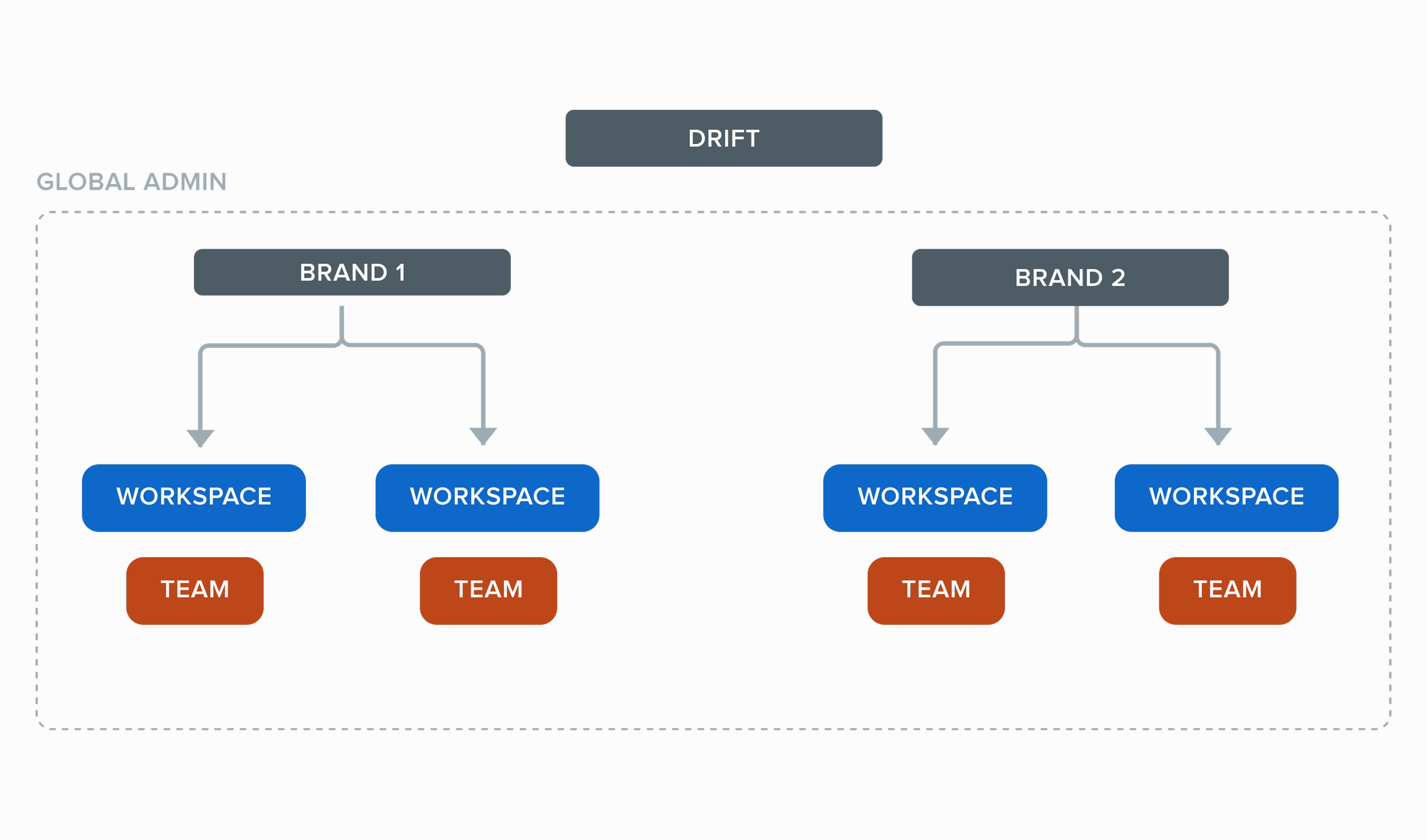
With the help of engineering, we soon identified a couple problems with this approach:
Technical Complexity & Misalignment
With the 1-to-1 relationship between brands and workspaces, there was potential for misalignment. Meaning if a customer had workspaces for EMEA and North America, and two brands (one for Product A and another for Product B), they would have been forced to create 4 workspaces. While this would have been an upsell for us, I considered it too much of a detriment to our core user, the marketer. If they wanted to publish a playbook in their Drift chatbot across a single product line, they would have to maintain two separate playbooks to target the same brand (Product A) in two separate workspaces (North America and EMEA).

Future of Workspaces
Workspaces as a feature within Drift was not at its full potential and had seen limited adoption amongst our enterprise-level customers. By coupling brands and workspaces, we would be building on top of something that we knew we needed to improve.
Customer Impact
With the complicated mapping we currently had, the team and I were also worried that we were making it more difficult for the customer to predict their Drift Widget appearance. And after testing, the engineers on my team identified that this mapping would also hinder our customers’ widget load times, negatively impacting their SEO (search engine optimization) scores.
Second Iteration
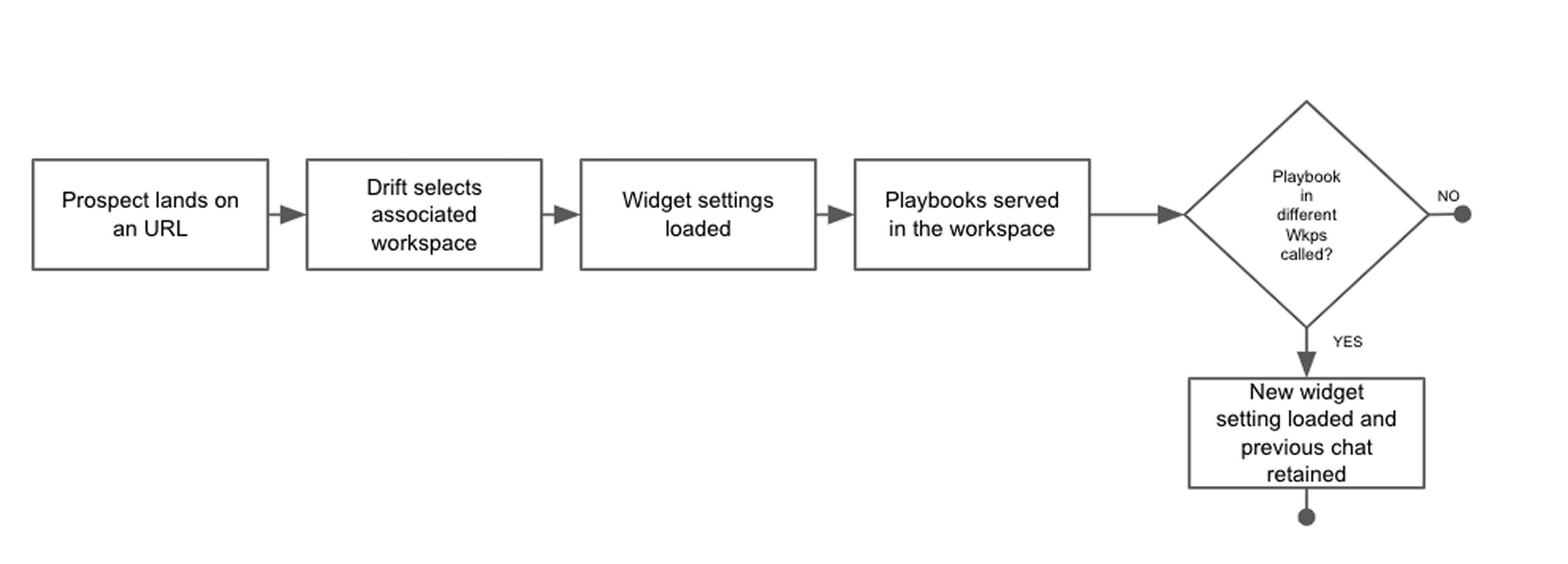
After some whiteboarding, the team and I decided to go with a different approach. In our new solution, instead of having brands exist a layer above a workspace, we decided to have multiple brands exist within a single workspace. In other words, an EMEA workspace can cover both Product A and Product B without requiring an additional workspace as in the previous solution.
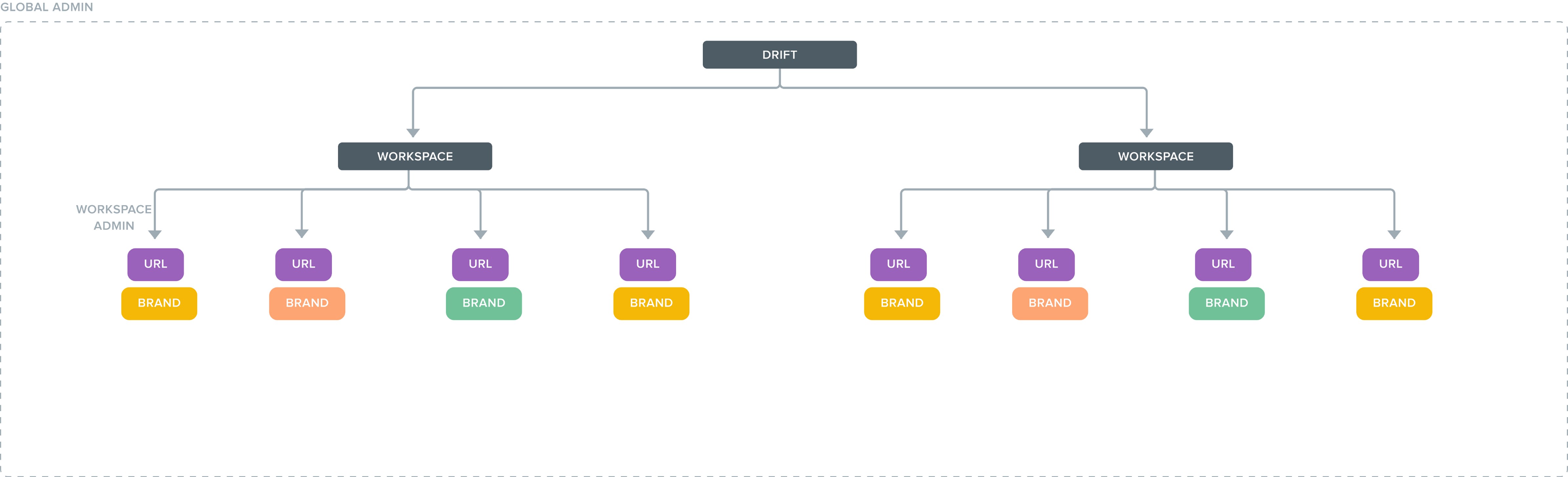
While my team generally focuses on the setup and maintenance of Drift settings, through this project, we also needed to consider our customers’ prospect/buyer experience. How could different brands load on the customer’s website? To ensure alignment, during our whiteboarding session, we settled on this mapping for the backend:
Design Exploration
Now that the entire product team felt good about our approach to incorporating brands within Drift, I went ahead with design explorations. Given the complexity of this project, I focused my designs on two key user stories:
As an admin, I want to create a new brand
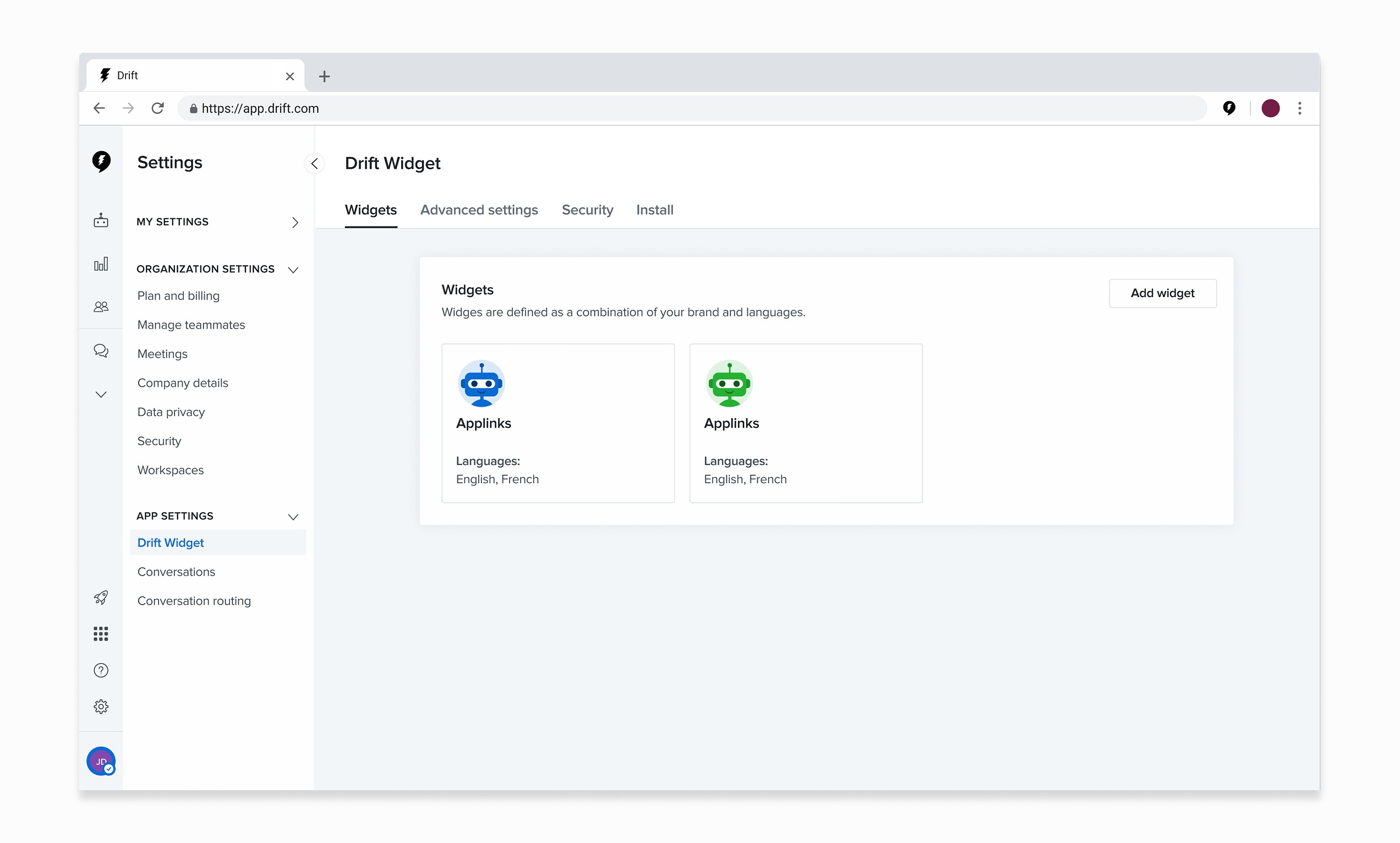
Under Brand Management, the Drift Widget, would now be identified as a combination of a customer’s brand elements (e.g., color, icon, etc.) and languages.
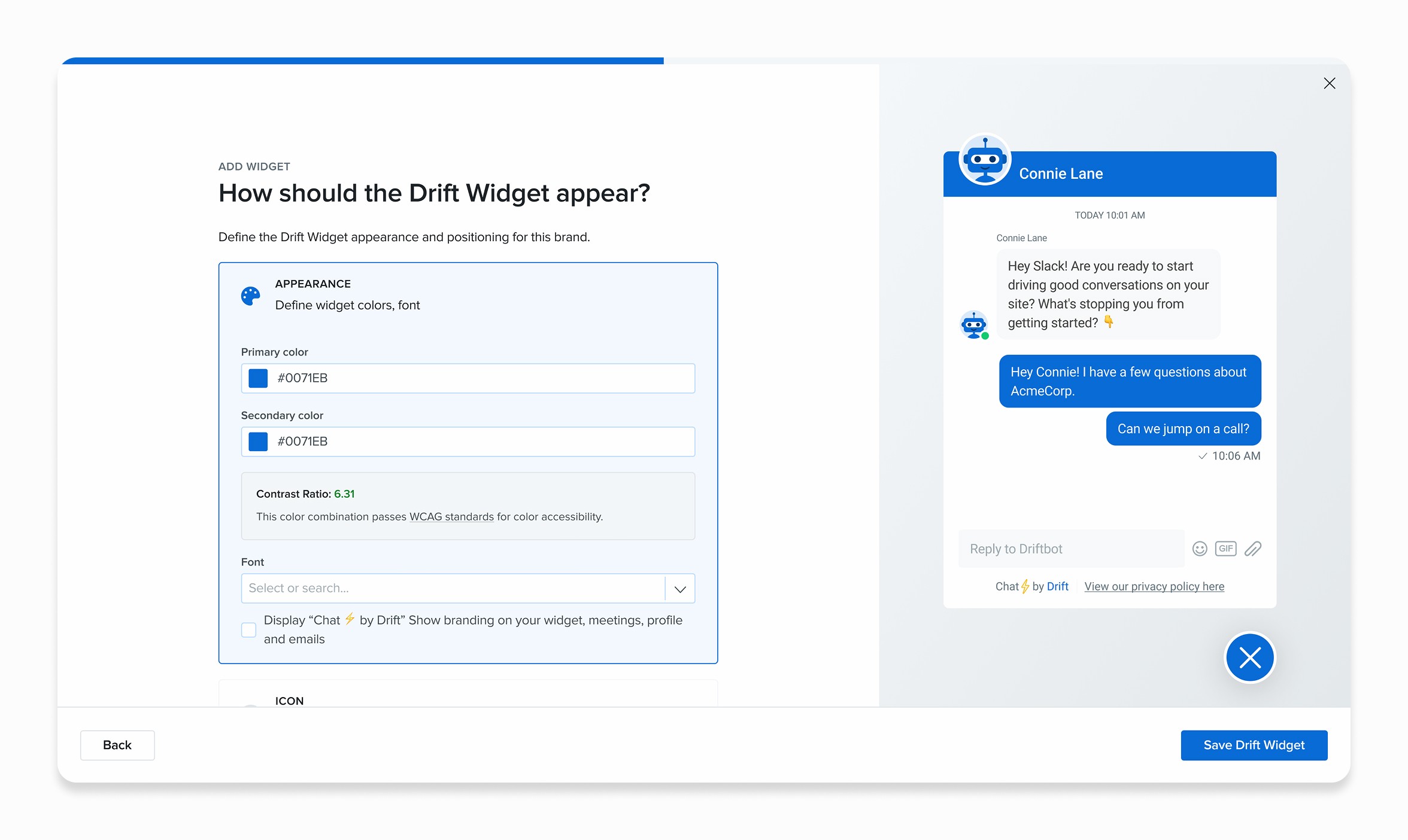
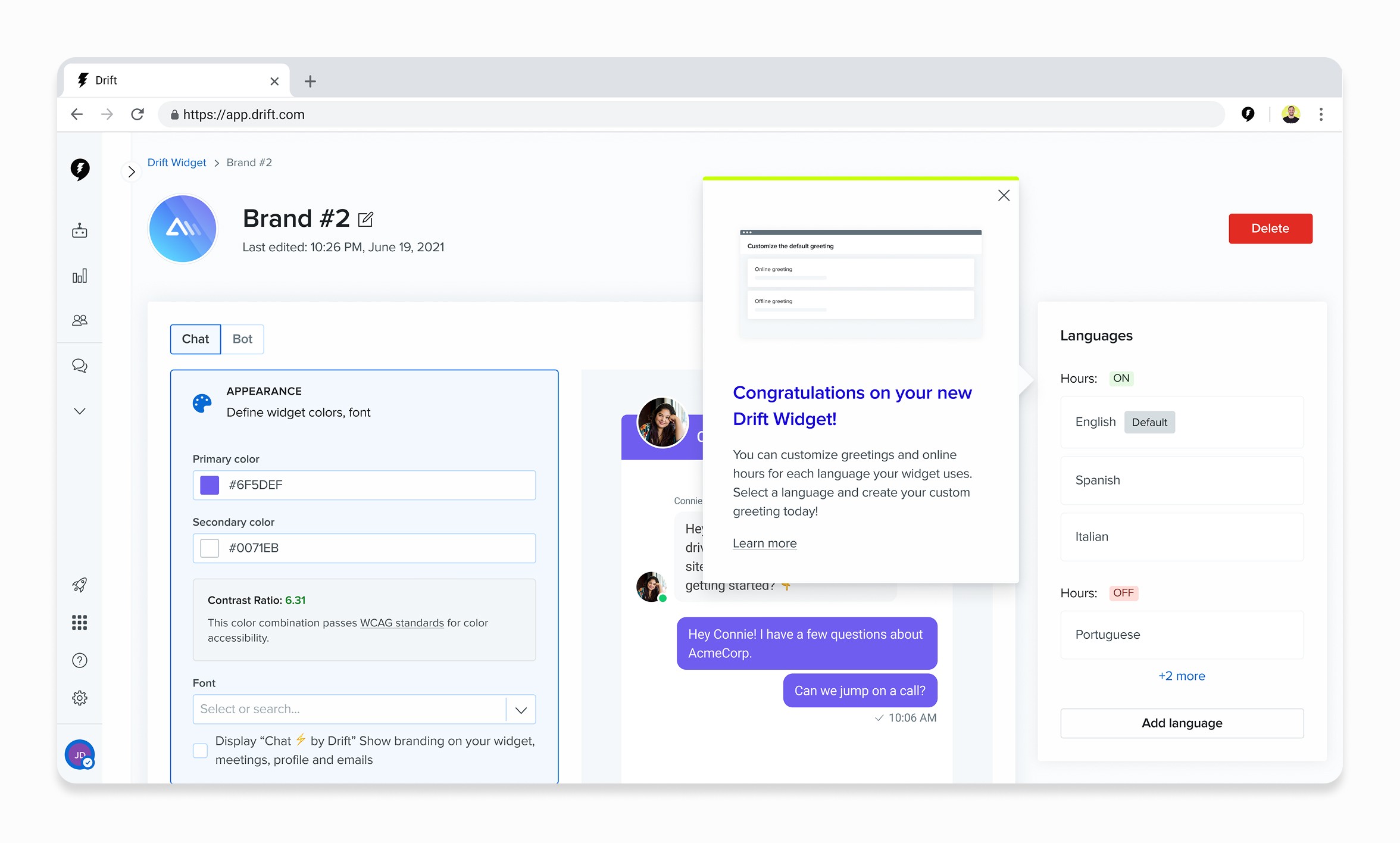
To help streamline the creation of a widget, admins navigate through a full modal experience that guides them through the necessary steps. Admins are also able to see updates in real-time as they customize their widget.
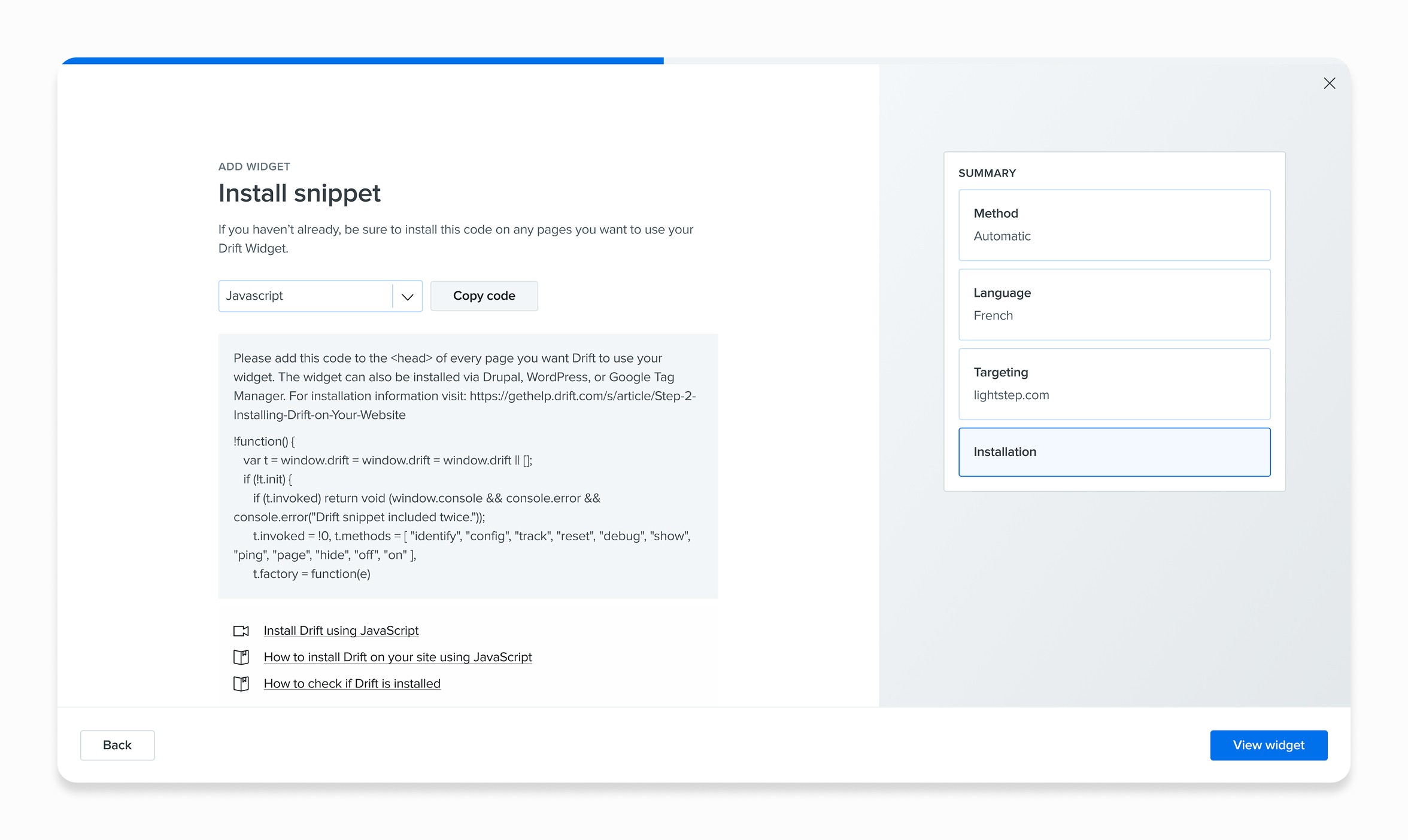
Given the greater complexity in creating a widget, admins have the ability to save their progress.
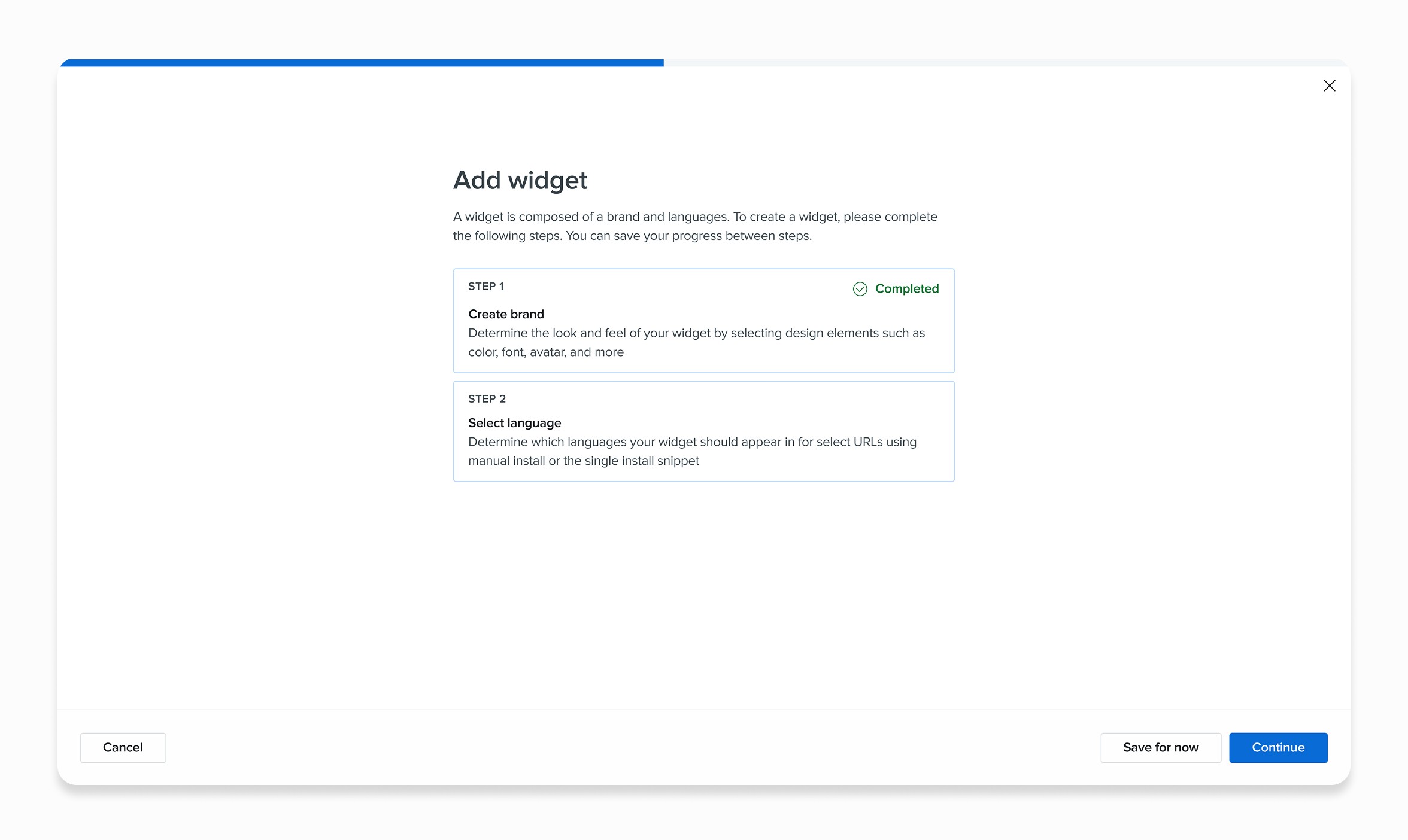
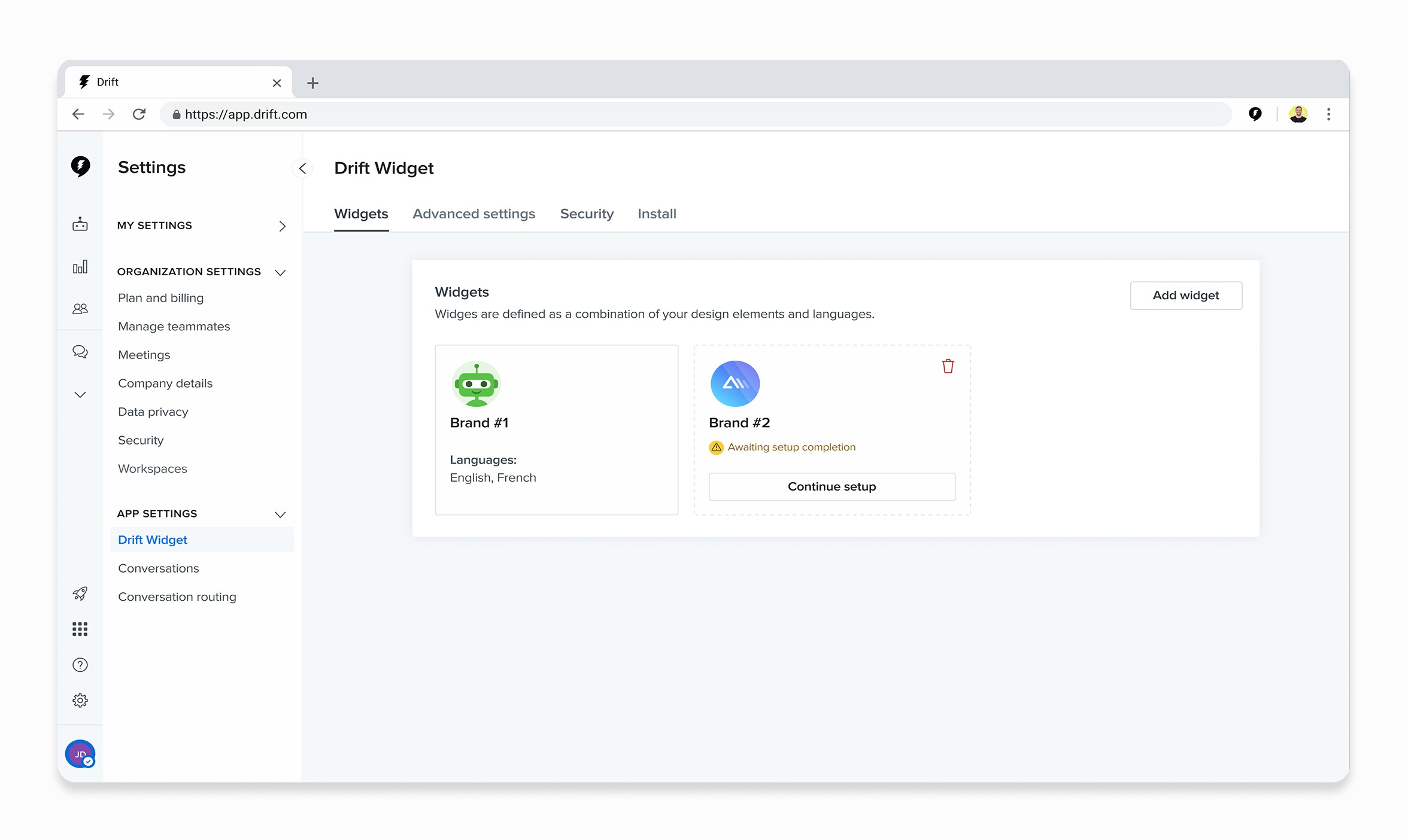
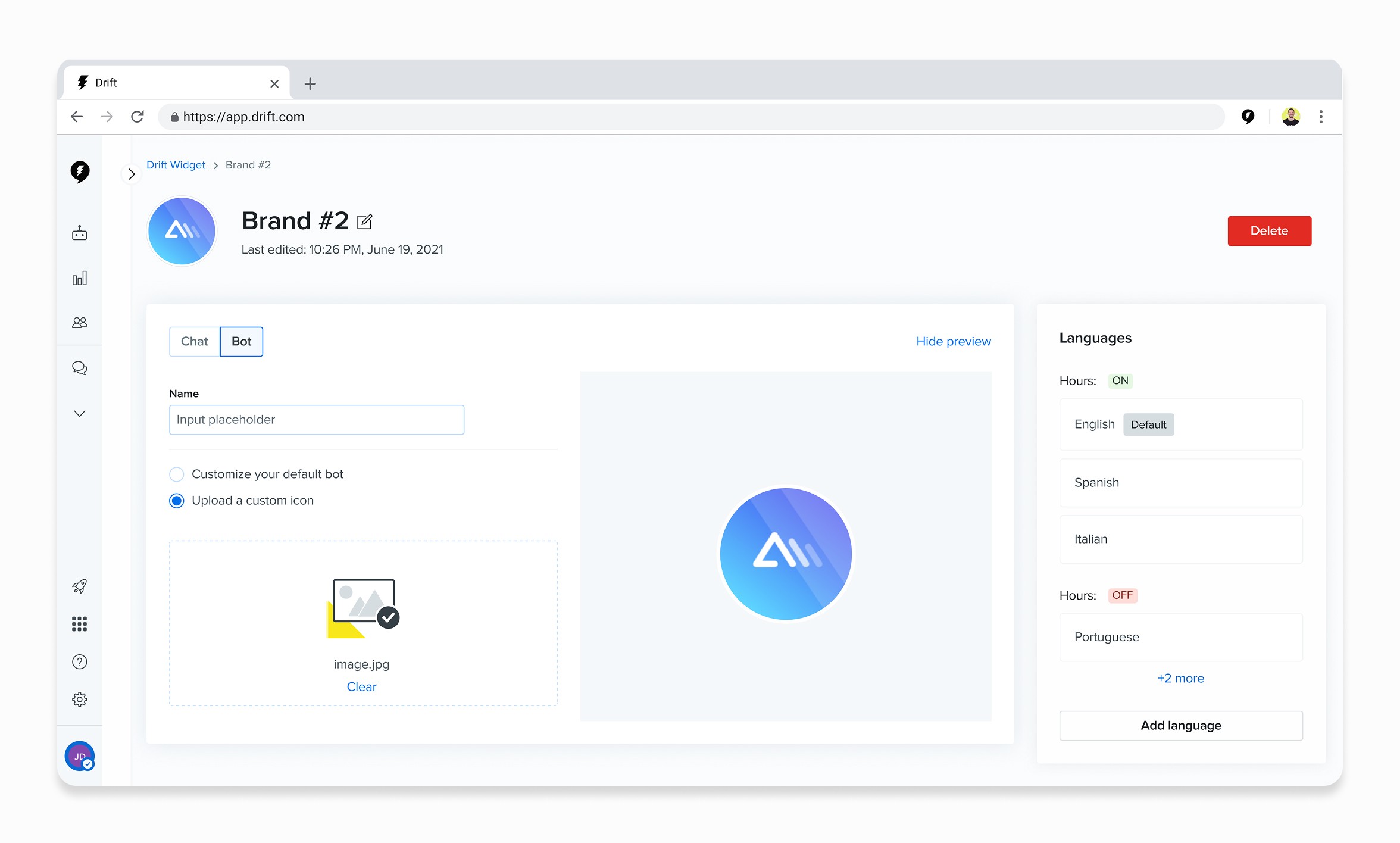
Admins can continue to iterate on brand elements after widget creation and are able to see the status of languages tied to the widget.
As an admin, I want to view my workspace
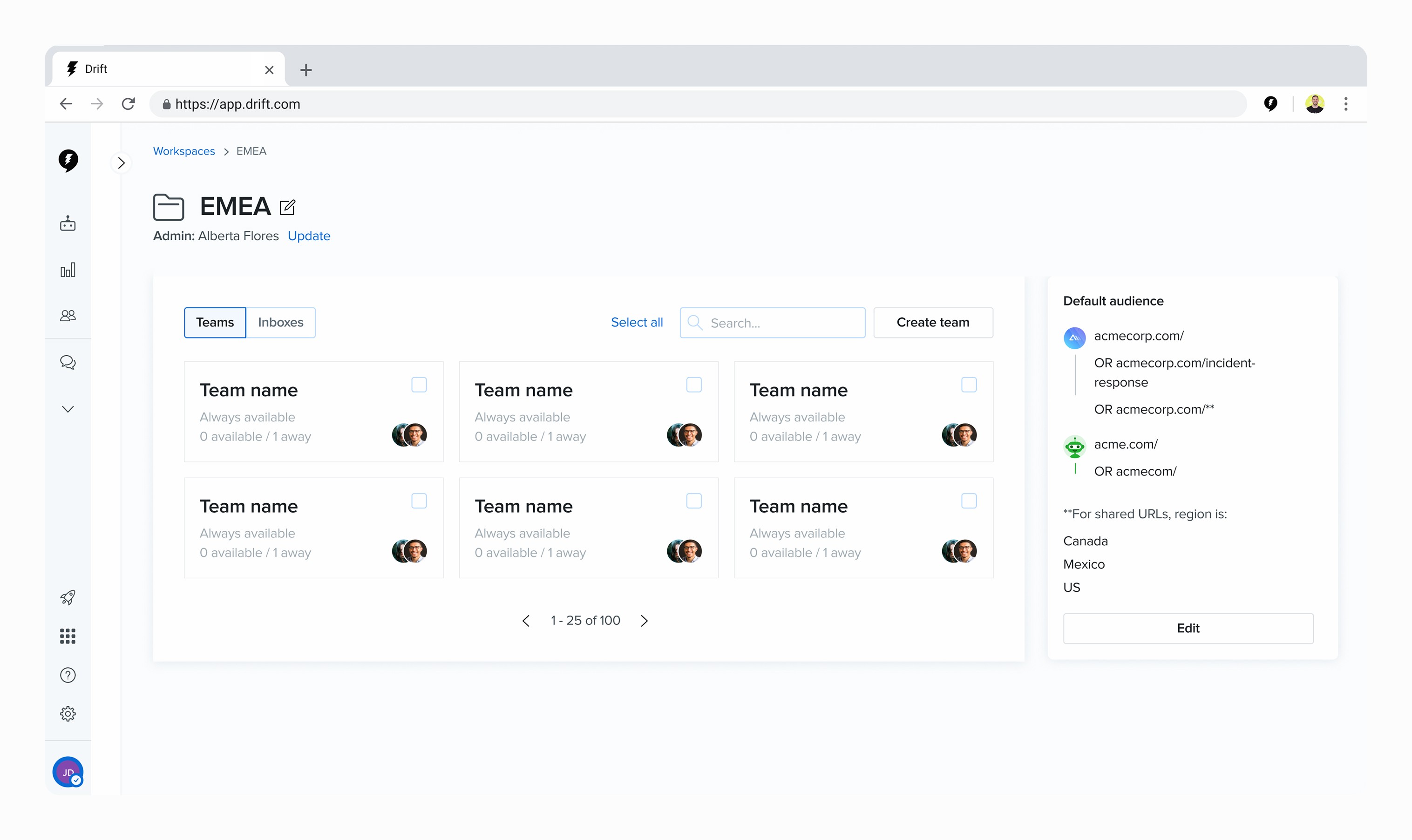
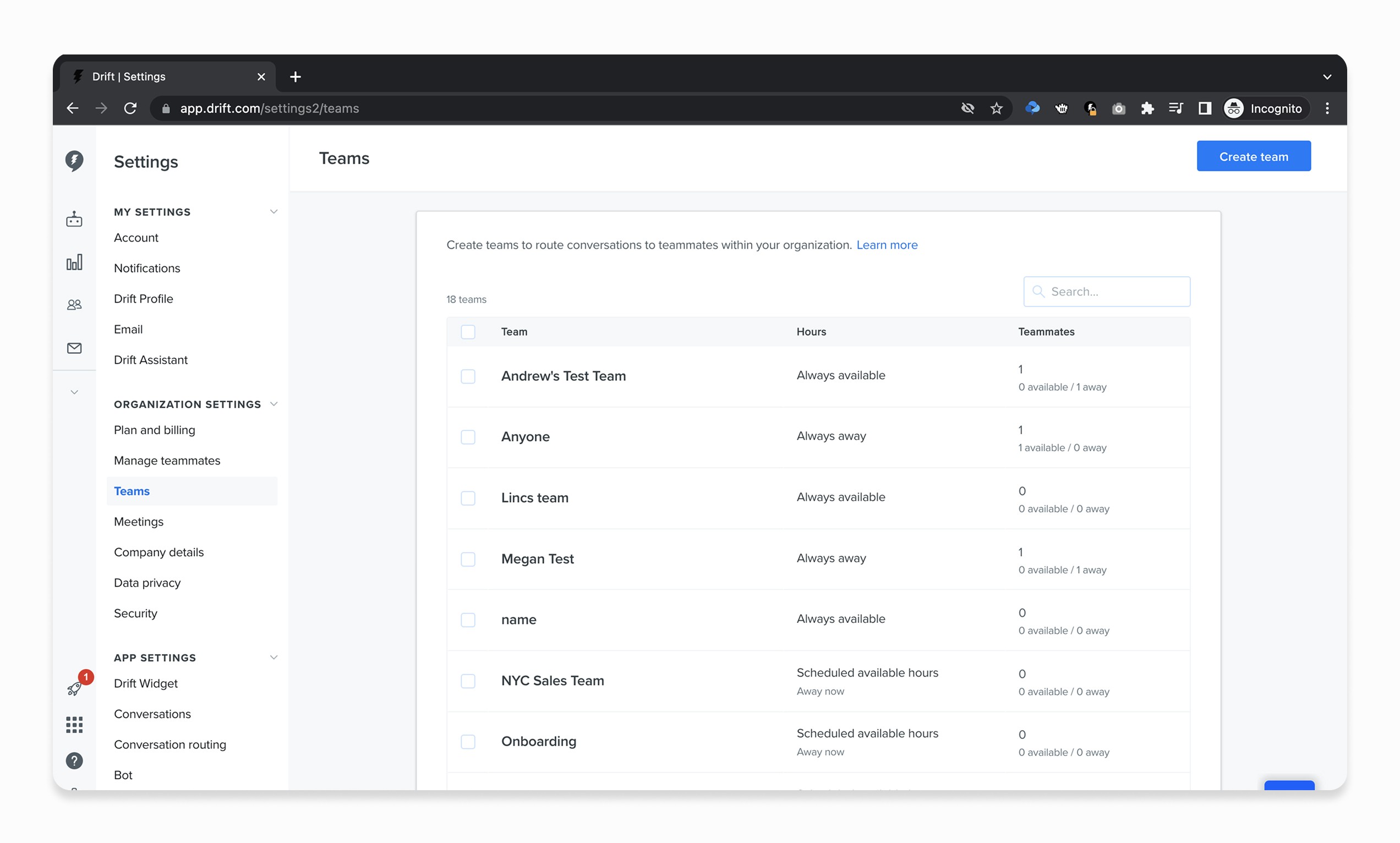
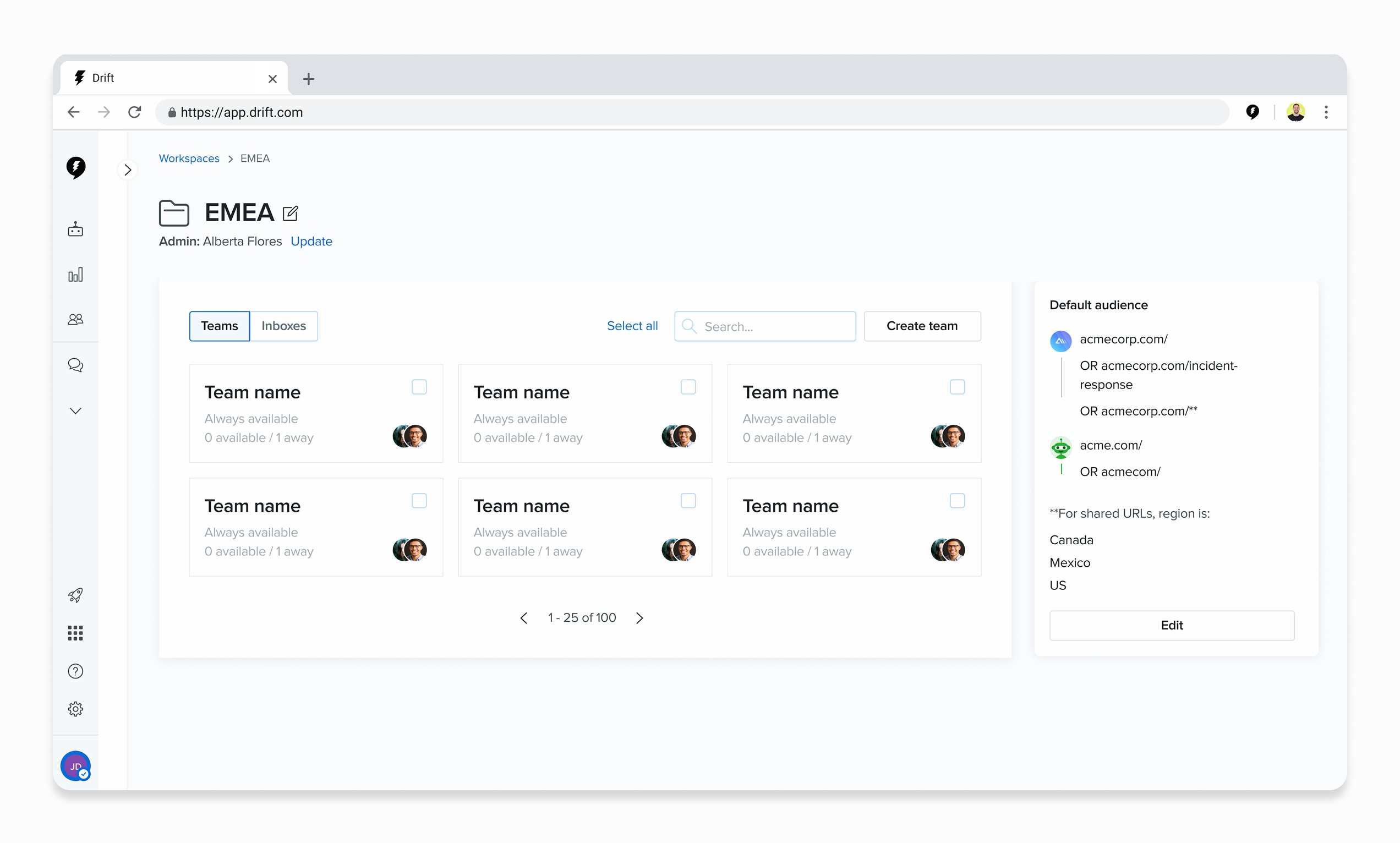
With the new brand-workspace relationship, brands connected to a URL are surfaced under the given workspace. For this project, I also decided to enhance the workspace view to eliminate unnecessary clicks and quicker absorption of information by utilizing a card layout.
Before
After
Brand Management was released for EAP in Q2 of FY23. The addition of brands had a significant impact on workspace adoption, more than doubling the number of customers who became interested in buying additional workspaces to their Drift subscription plan in order to enable brands.
The process of building brands within Drift was a wonderful learning opportunity into the full JOB process. Through consistent collaboration, my team and I were able to develop a solution that is scaleable and impactful.
Due to it’s success, my product team was tasked with expanding brands as a billable add-on across all plans and not limiting it to just enterprise-level customers.